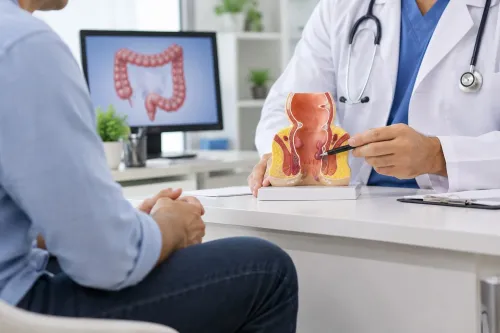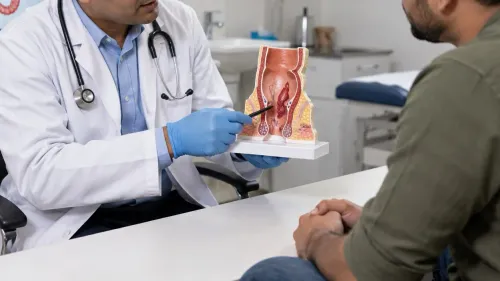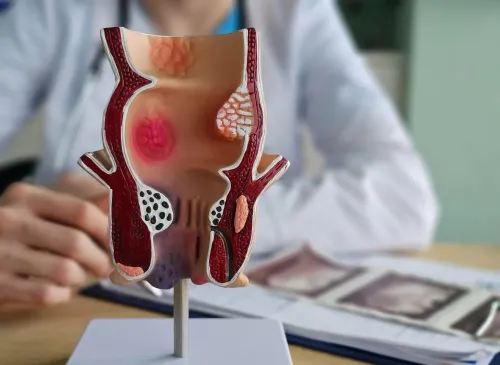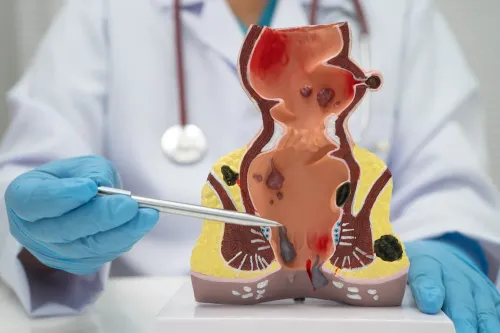
Laser treatment for piles can describe more than one procedure, and the right choice depends on the haemorrhoid’s location, grade, prolapse and associated conditions. By the end, you will know what happens before, during and after treatment, how recovery is likely to progress, and which questions to ask before consenting.
Key takeaways
- LHP shrinks haemorrhoids; HeLP targets their feeding arteries.
- Confirm the haemorrhoid grade and procedure name before consenting.
- Plan several days for recovery, even after minimally invasive treatment.
- Seek urgent advice for heavy bleeding, fever or worsening pain.
What laser treatment actually treats—and when it is unsuitable
Laser treatment for piles is not one standard operation. In laser haemorrhoidoplasty (LHP), a fibre enters the haemorrhoidal cushion and delivers controlled submucosal heat, causing coagulation and shrinkage rather than cutting the tissue away. Doppler-guided haemorrhoidal artery laser coagulation (HeLP) is different: it targets feeding arteries, so do not treat the two names as interchangeable.
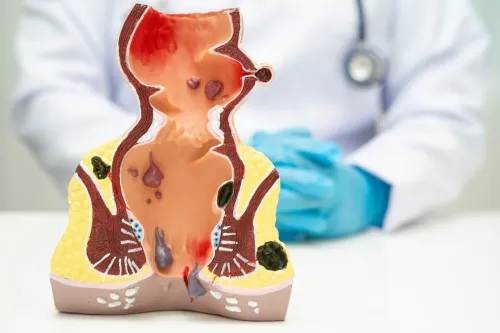
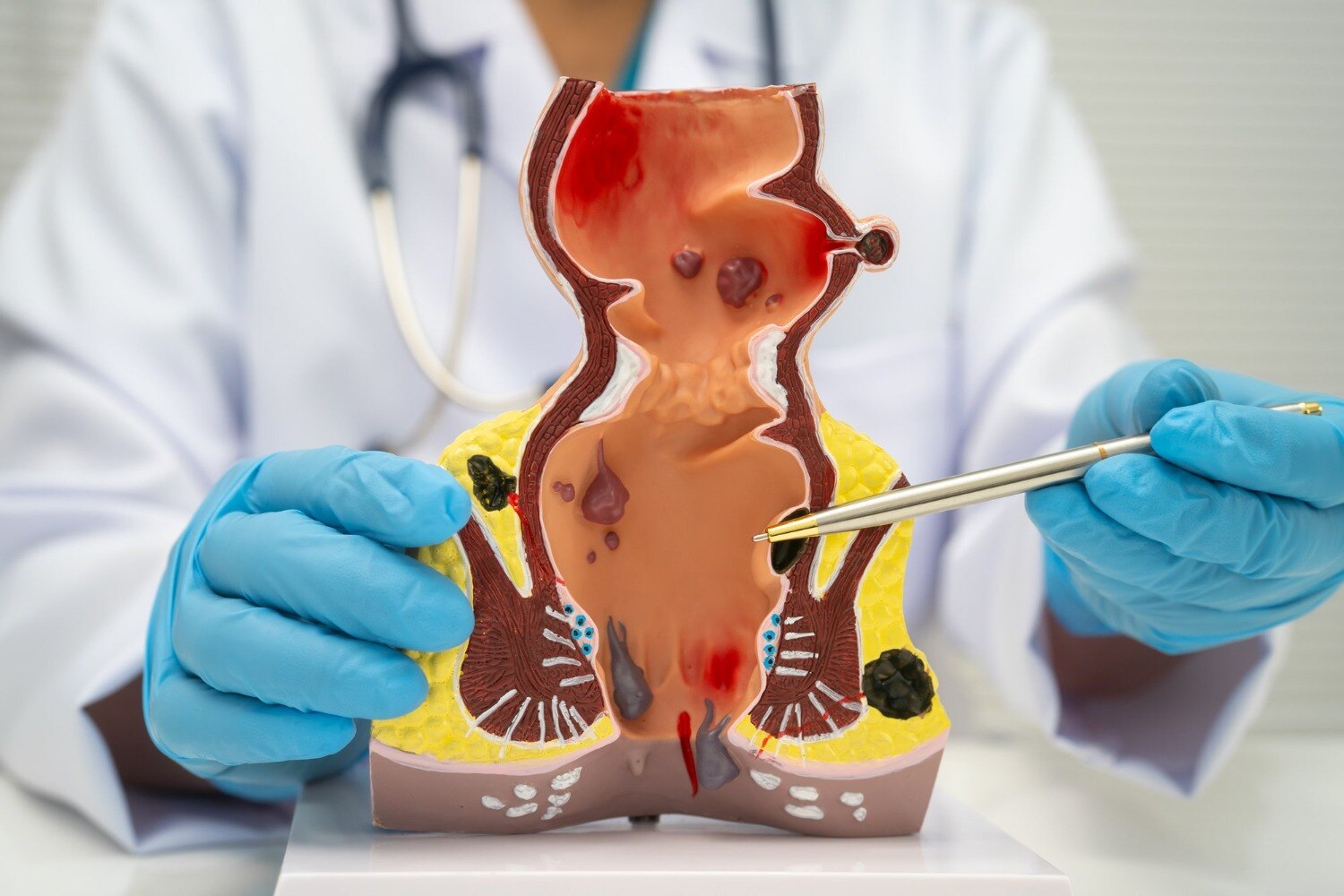
LHP is mainly intended for symptomatic internal haemorrhoids, particularly grade II and selected grade III disease. The grading system describes internal haemorrhoids grades I II III IV as bleeding without prolapse, prolapse that reduces itself, prolapse needing manual reduction, and irreducible prolapse.
| Option | What it does | When it fits better |
|---|---|---|
| LHP | Shrinks internal haemorrhoidal cushions from inside | Grade II or selected grade III disease without a large external component |
| Rubber-band ligation | Cuts blood flow to a prolapsing internal haemorrhoid | Many grade I, grade II and some grade III cases |
| Excisional haemorrhoidectomy | Removes haemorrhoidal tissue and external components | Grade III or IV disease, substantial fixed prolapse, or combined internal and external haemorrhoids |
| Other treatment | Addresses a different cause or anatomy | Thrombosed or strangulated piles, anal fissure, fistula, or unexplained bleeding |
LHP does not remove external skin tags and offers less mechanical lifting than excision, so another operation is more appropriate for bulky external disease or marked prolapse. A laser also does not automatically treat a fissure or fistula: a fistula needs tract and sphincter assessment, while a fissure requires treatment aimed at reducing sphincter spasm.
Have rectal bleeding assessed before treatment, especially with changed bowel habits, anaemia or a family history of colorectal cancer.
The examinations and steps before the laser procedure
Diagnosis comes before laser: the clinician must confirm internal haemorrhoids and exclude another cause of bleeding. A digital rectal examination checks tenderness, masses and prolapse; anoscopy allows direct inspection of the anal canal and haemorrhoidal cushions.
Rectal bleeding should not automatically be blamed on piles. The clinician decides whether colonoscopy for rectal bleeding is needed by considering your age, bleeding pattern, changed bowel habits, anaemia, family history and colorectal-cancer risk.
- Review symptoms, previous treatments, bowel habits and medicines, including aspirin, anticoagulants and drugs that cause constipation.
- Examine the anus and rectum, then grade the prolapse and assess whether external disease, thrombosis, fissure or fistula changes the treatment choice.
- Confirm which laser procedure is proposed. Laser haemorrhoidoplasty places a fibre inside the haemorrhoidal cushion to create controlled submucosal coagulation and shrinkage; Doppler-guided haemorrhoidal artery laser coagulation, or HeLP, targets feeding arteries instead.
- Arrange further tests when findings do not clearly explain the bleeding.
- Follow the clinic’s fasting instructions and complete bowel preparation if required. Do not stop an anticoagulant without the prescribing clinician’s advice.
- Discuss anaesthesia, expected pain, urinary difficulty, bleeding, recurrence and alternatives before signing consent.
Tell the clinician about pregnancy, allergies, sleep apnoea and previous reactions to anaesthesia. Ask who will provide transport home, because you should not drive after sedation or general anaesthesia.
What happens on the treatment day and how recovery progresses
Most laser haemorrhoid procedures are completed as day surgery, with the operation itself commonly taking less than an hour. The anaesthetic depends on the technique and extent of treatment: local anaesthesia may suit limited treatment, while spinal anaesthesia or general anaesthesia may be chosen for broader treatment or added procedures.
You can usually expect this sequence:
- After treatment, you remain in recovery until you are alert, pain is controlled and you can pass urine.
- Discharge is often the same day after an outpatient piles procedure. Arrange an adult to take you home; do not drive yourself.
- Plan for one to three days away from desk-based work, although heavy work or prolonged sitting may require longer.
- Resume walking as comfort allows, but delay strenuous exercise and heavy lifting until your clinician permits it.
- Your first bowel movement may occur later that day or the next day. Keep stools soft with fluids, fibre and a prescribed laxative when advised; straining, constipation and diarrhoea can all worsen pain.
Pain, pressure, light bleeding or discharge can continue after you return home. Early return to work does not mean the haemorrhoid has fully healed, and recovery takes longer when excision or external disease is treated alongside the laser procedure. Do not drive while taking opioid pain medicine or while sitting and braking remain uncomfortable.
Aftercare, expected symptoms and warning signs
Care for the treated area with gentle washing, a warm sitz bath, and bowel movements that do not require straining. Pat the skin dry rather than rubbing it, and avoid inserting creams, suppositories or other products unless your clinician prescribed them.
Drink enough water and dietary fibre to keep stools soft. Take the prescribed stool softener exactly as directed; constipation and frequent loose stools can both irritate the treatment site. Use the prescribed analgesic for discomfort, and contact the treating clinic if pain is not controlled.
| Finding | Usually expected | Seek urgent medical assessment |
|---|---|---|
| Pain or pressure | Mild discomfort that gradually improves | Severe, increasing or uncontrolled pain |
| Bleeding | A small amount of spotting after a bowel movement | Heavy bleeding, clots, dizziness or faintness |
| Bowel movements | Tenderness or mild difficulty at first | Inability to pass stool, especially with increasing pain or swelling |
| Urination | Temporary hesitation after anaesthesia | Inability to pass urine or a painfully full bladder |
| Temperature or swelling | Mild local swelling | Fever, chills, pus, rapidly worsening swelling or a hard, very painful lump |
Do not wait for a routine follow-up if these warning signs appear. Rare complications include infection, delayed haemorrhage, urinary retention, thrombosis of residual haemorrhoidal tissue, thermal injury and anal stenosis.
Questions to ask before choosing laser treatment
Consent only after the clinician names the technique, grades the haemorrhoids, and explains what it will not treat. Laser haemorrhoidoplasty and Doppler-guided haemorrhoidal artery laser coagulation (HeLP) are different procedures.
At a consultation with Dr Gowri Singh-Best Laser Piles Surgeon in Pune, ask for the proposed method, anaesthesia, and a written plan if treatment must be changed during surgery.
Ask these questions before signing consent:
- Are my haemorrhoids internal, external, or both, and what grade are they?
- Will external tissue or significant prolapse remain after laser treatment?
- Is my bleeding definitely from haemorrhoids, and do I need further investigation?
- What recurrence rate and complication rate do you record at two or five years?
- How often do your patients need retreatment, conversion, or later excisional surgery?
- What happens if laser treatment does not control the prolapse?
| Option | Main target | Key trade-off |
|---|---|---|
| Laser haemorrhoidoplasty | Shrinks internal cushions | Less tissue removal; long-term recurrence evidence is limited |
| HeLP | Seals feeding arteries | Suits bleeding from selected internal haemorrhoids |
| Rubber-band ligation, sclerotherapy, infrared coagulation | Office treatment for smaller internal piles | May require repeated sessions |
| Stapled haemorrhoidopexy or excisional haemorrhoidectomy | Prolapse or larger grade III–IV disease | More invasive, but may address prolapse more directly |
Ask why the recommended option fits your anatomy rather than accepting “laser” as automatically superior.
Related service
Laser Piles Surgeon in Pune Laser Piles Surgeon in Viman Nagar, Kharadi, Vishrantwadi, Pune Dr Gowri Singh is the Best Laser Piles Surgeon in Pune, specializing as a Piles Surgeon, Laser Piles Doctor, and Lady Piles Surgeon in Viman Nagar,... View service → |
Frequently asked questions
What does laser treatment for piles actually treat?
Laser haemorrhoidoplasty shrinks selected haemorrhoidal tissue with submucosal heat. HeLP targets feeding arteries with Doppler guidance. Neither procedure suits every haemorrhoid pattern.
What examinations are needed before laser treatment?
Your surgeon needs a history, examination of the anal canal and a diagnosis of the haemorrhoid grade. Further tests depend on your symptoms, age and bleeding pattern.
How long does recovery take after laser piles treatment?
Recovery varies by procedure, haemorrhoid severity and your work. Plan rest initially and return to activity gradually according to your surgeon's instructions.
Which symptoms after treatment require medical advice?
Contact your surgical team for heavy or persistent bleeding, fever, worsening pain, urinary difficulty or symptoms that do not improve as expected.
What should you ask before choosing laser treatment?
Ask which laser procedure is proposed, why it suits your haemorrhoids, what alternatives exist, expected recovery, possible complications and follow-up arrangements.