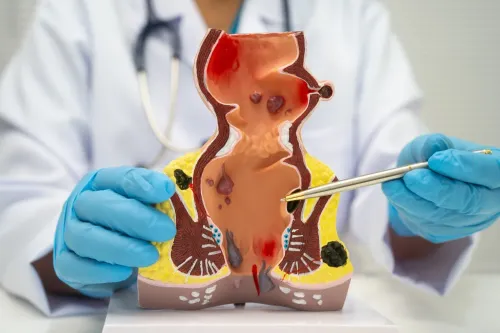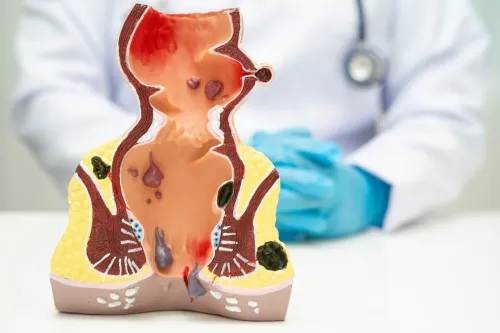
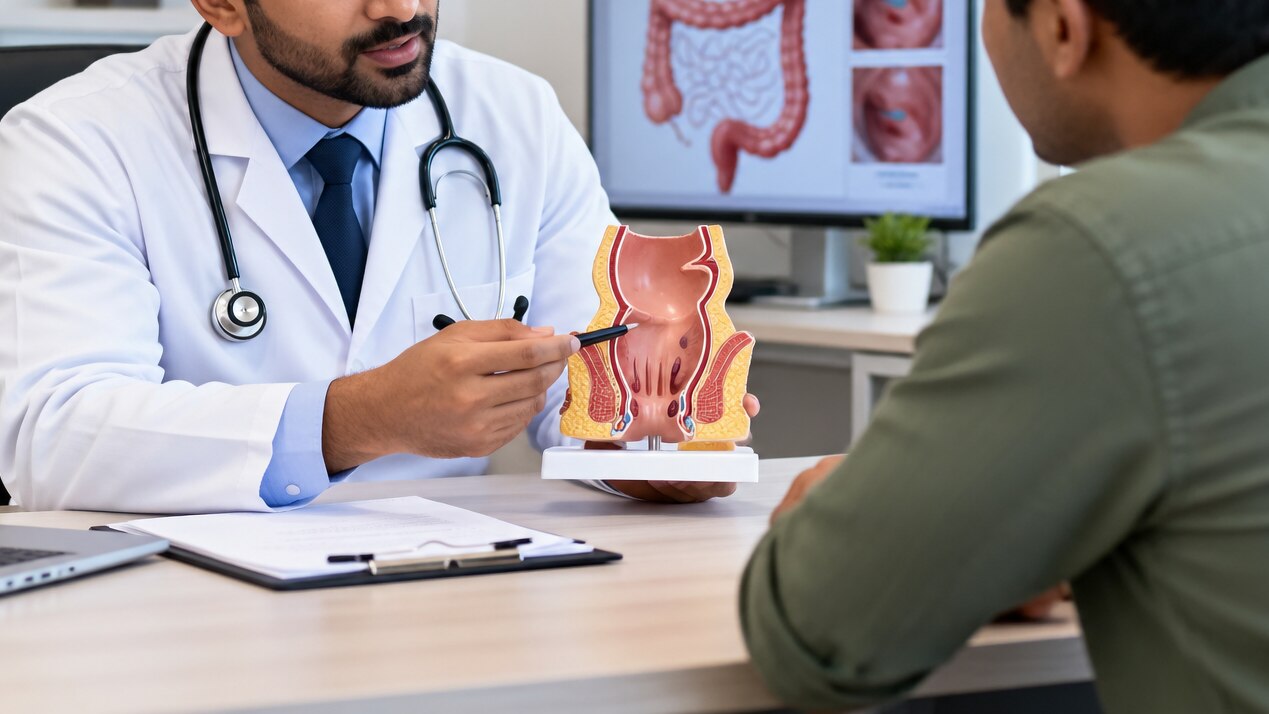
Rectal bleeding, itching, a lump or tissue that comes out during bowel movements can point to piles, but the same symptoms can occur with fissures, fistulas, abscesses and bowel disease. By comparing urgency, diagnostic methods, qualifications and treatment fit, you can choose a specialist based on evidence rather than a procedure label such as “laser.”
Key takeaways
- Arrange an examination for rectal bleeding instead of assuming piles are the cause.
- Check the specialist’s credentials and ask what the first consultation includes.
- Compare treatments by diagnosis, haemorrhoid grade, recovery time and risks.
- Choose laser treatment only when it fits your condition and treatment goals.
Match your symptoms to the right level of specialist care
Routine piles care suits painless rectal bleeding, prolapsing tissue, or anal itching when symptoms are mild and you feel otherwise well. Arrange an examination rather than assuming bleeding is from piles: anal fissure, fistula, inflammatory bowel disease, polyps, and colorectal cancer can look similar.
| Symptom pattern | Level of care | What it may require |
|---|---|---|
| Painless rectal bleeding or prolapsing tissue | Prompt routine specialist assessment | Inspection, digital rectal examination when appropriate, and anoscopy; persistent or changing bleeding may need bowel investigation |
| Anal itching without severe pain or illness | Routine assessment | Confirmation of piles versus dermatitis, infection, or another anal condition |
| Painful lump near anus | Prompt assessment, especially if swollen or red | A thrombosed external pile is possible; constant worsening pain, fever, or redness raises concern for an abscess requiring drainage |
| Sharp pain during bowel movements, discharge, or recurrent symptoms | Specialist assessment and investigation | These patterns can indicate an anal fissure, fistula, abscess, or inflammatory disease rather than uncomplicated piles |
| Heavy bleeding, black or tarry stool, dizziness, fainting, severe escalating pain, fever, spreading redness, or inability to pass urine | Urgent medical assessment | These features can signal significant bleeding, infection, or another diagnosis |
Do not wait for a routine piles appointment if symptoms are severe. A new hard lump, unexplained weight loss, or bleeding that persists despite treatment also warrants investigation beyond over-the-counter hemorrhoid products.
Verify credentials and what the first consultation includes
A reliable clinician can show more than a “laser specialist” label. Verify medical registration with the relevant national regulator, formal general-surgery training, current proctology experience, hospital privileges, and experience performing the specific procedure under consideration. Piles specialist qualifications are useful only when they are backed by checkable training and active anorectal practice.
Ask these questions during the first consultation:
- Is your medical registration current, and where can I verify it?
- What general-surgery training and proctology experience do you have?
- Do you routinely diagnose and treat hemorrhoids, fissures, fistulas and abscesses?
- Will you inspect the anus, perform a digital rectal examination when appropriate, and use anoscopy or another direct view of the anal canal?
- If you suspect a fistula or recurrent abscess, why do I need—or not need—pelvic MRI, endoanal ultrasound or examination under anaesthesia?
The examination should establish a working diagnosis before anyone recommends laser treatment or another procedure. Rectal bleeding must not be assigned to piles automatically; the clinician should consider fissure, abscess, fistula, inflammatory bowel disease, polyps and colorectal cancer, then explain any need for further bowel evaluation.
A painful red lump, fever, worsening constant pain, heavy bleeding, black stools or dizziness needs prompt assessment rather than a routine appointment. An abscess requires drainage; creams do not clear the infection.
Compare treatment options by diagnosis, grade and trade-offs
Do not choose a treatment because it is newer or marketed as painless. Compare the diagnosis, Goligher grade, prolapse, external component, symptom severity and previous response to bowel-habit changes.
| Option | Best fit | Main trade-off |
|---|---|---|
| Conservative care | Grade I and mild Grade II internal haemorrhoids, especially bleeding without significant prolapse | Increase fibre and fluids, avoid straining and limit toilet sitting. This can reduce bleeding but will not remove every prolapsing haemorrhoid. |
| Office procedures | Persistent Grade I–II symptoms and selected Grade III internal haemorrhoids | Rubber-band ligation suits prolapsing internal haemorrhoids; sclerotherapy and infrared treatment suit selected smaller bleeding haemorrhoids. Expect possible pain or bleeding, and ask about recurrence and aftercare. |
| Conventional haemorrhoidectomy | Large Grade III–IV prolapse, substantial external disease, or combined internal and external haemorrhoids | It offers durable removal but brings more postoperative pain, time away from work, bleeding and urinary-retention risk than office treatment. |
| No procedure yet | Symptoms that are mild, improving, or not clearly caused by haemorrhoids | Observation avoids procedural risks while the diagnosis is clarified, but persistent bleeding still needs review. |
A recommendation should state the expected benefit, alternatives and the consequence of doing nothing. If examination suggests an anal fissure, abscess or fistula, treating “piles” alone misses the problem; a fistula’s relationship to the sphincter determines the balance between recurrence and continence preservation.
Ask for complication and recurrence figures for the exact procedure, not a guarantee that one technique suits every grade.
Test whether laser treatment actually fits your condition
Laser piles treatment fits only after a specialist confirms the diagnosis, maps the anatomy and assigns a haemorrhoid grade. A procedure offered without inspecting the area, performing a digital rectal examination when appropriate and using anoscopy or another direct examination is a warning sign.
Ask the specialist to work through these checks:
- Confirm that bleeding or prolapse comes from haemorrhoids, not a fissure, fistula, abscess, inflammatory bowel disease, polyp or cancer.
- Record whether the disease is internal, external or mixed, and whether external haemorrhoids or skin tags require separate treatment.
- Grade the internal haemorrhoid by its prolapse and assess its size, number, symptoms, bowel habits and response to fibre, fluids and straining changes.
- Explain the intended benefit of laser, the chance of recurrence, and procedure-specific rates for bleeding, pain, infection, urinary retention and other complications.
- Compare laser with no procedure, rubber-band ligation and surgery, including recovery time, aftercare and what happens if symptoms persist.
Laser is not a universal solution. Rubber-band ligation often suits symptomatic internal haemorrhoids that remain troublesome after bowel-habit measures, but it does not treat external disease. Excisional haemorrhoidectomy is more painful and slower to recover from, yet it is often more appropriate for large external components, combined internal-and-external disease or advanced prolapse.
Ask for the reason—not a promise of a painless cure.
Use the treatment plan to make your final choice
Choose the clinician who gives you a diagnosis, severity assessment and written plan—not the one who promotes a single technique. Before agreeing, you should know the intended benefit, treatment alternatives including no procedure, complication rates, recurrence risk, recovery time and follow-up arrangements.
Use the same checklist for every clinician:
- Ask whether your symptoms indicate piles, fissure, abscess, fistula or another condition, and whether examination under anaesthesia, pelvic MRI or endoanal ultrasound is needed.
- Ask how often the clinician performs the proposed procedure, rather than counting all laparoscopic operations.
- Disclose anticoagulant use, diabetes, inflammatory bowel disease and previous anorectal operations; ask how each changes bleeding risk or treatment.
- For fistula, ask how the tract relates to the anal sphincter and how the plan balances recurrence risk against continence preservation.
- Ask who will provide urgent advice for fever, heavy bleeding, urinary difficulty or worsening pain.
Compare written answers, not reassuring descriptions. If you assess Dr Gowri Singh-Best Laser Piles Surgeon in Pune alongside another clinician, give both the same questions and record their answers.
| Checkpoint | Satisfactory answer | Warning sign |
|---|---|---|
| Diagnosis | Named condition, grade and examination findings | “Piles” without examination |
| Options | Procedure, alternatives and no-procedure option explained | Laser or stapling presented as universally best |
| Safety | Personal complication and recurrence figures, hospital privileges and follow-up | Only generic success claims |
| Experience | Number of the proposed procedure performed recently | Experience described only as “minimally invasive” |
Related services
Piles Doctor in Pune Piles Doctor in Viman Nagar, Kharadi, Vishrantwadi, Pune Dr Gowri Singh is the Best Piles Doctor, Laser Piles Surgeon, Laser Piles Doctor, Lady Piles Doctor in Viman Nagar, Kalyani Nagar, Koregaon Park,... View service → |
Laser Piles Surgeon in Pune Laser Piles Surgeon in Viman Nagar, Kharadi, Vishrantwadi, Pune Dr Gowri Singh is the Best Laser Piles Surgeon in Pune, specializing as a Piles Surgeon, Laser Piles Doctor, and Lady Piles Surgeon in Viman Nagar,... View service → |
Frequently asked questions
When should you see a piles specialist?
See a specialist for rectal bleeding, prolapsing tissue, anal itching or persistent symptoms, especially when symptoms are not mild or painless.
What should you verify before booking a piles consultation?
Verify the doctor’s surgical credentials, experience with anal conditions and what the first consultation includes, such as examination, diagnosis and treatment discussion.
How do you compare piles treatment options?
Compare options by the confirmed diagnosis, haemorrhoid grade, expected recovery, pain, recurrence risk and other treatment trade-offs.
Is laser treatment suitable for every piles condition?
No. Laser treatment fits only conditions for which the specialist confirms it is clinically appropriate after examination and diagnosis.